Bring the Property Into Focus Before Choosing Features
- By A.J. Kraig Landscape and Design
You do not need a finished vision before speaking with a landscape designer. You do need a clear account of what is not working, how you want to use the property, and which decisions matter most. That gives the conversation a better starting point than a disconnected list of plants, materials, and features.
A.J. Kraig Landscape and Design provides landscape design that can coordinate planting, patios, walkways, retaining walls, drainage, irrigation, turf, and outdoor living areas. For North Royalton homeowners, the questions below help turn an early idea into a scope that can be evaluated before booking.
1. What should I bring to the first conversation?
Start with photos of the property and a short list of priorities. Note where water collects, grass wears thin, shrubs feel overgrown, paths feel awkward, or outdoor space goes unused. Identify what must stay, such as a mature tree, deck, fence, view, utility access, or existing patio.
Then separate must-haves from possibilities. A safer walkway or drainage correction may be essential; a fire feature, outdoor kitchen, or expanded planting plan may be optional. This distinction helps establish a workable core scope without forcing every selection too early.
2. Which site conditions should be reviewed before the layout?
Ask how grade, drainage paths, downspouts, sun and shade, mature roots, utilities, equipment access, and existing structures will influence the plan. North Royalton's seasonal rain, snowmelt, and freeze-thaw conditions make water movement and installation sequence important from the beginning.
The city maintains a Stormwater Division, underscoring that runoff and drainage are real local property considerations. A design should respond to the specific site; it should not assume a patio, bed, wall, or turf area can be placed without studying where water moves.
3. Should the design address one area or the whole property?
A focused project can still benefit from a whole-property view. A new patio affects circulation, drainage, furniture space, planting edges, and future access. New beds can change lawn shape and irrigation coverage. A retaining wall can set elevations for walkways, steps, and planting.
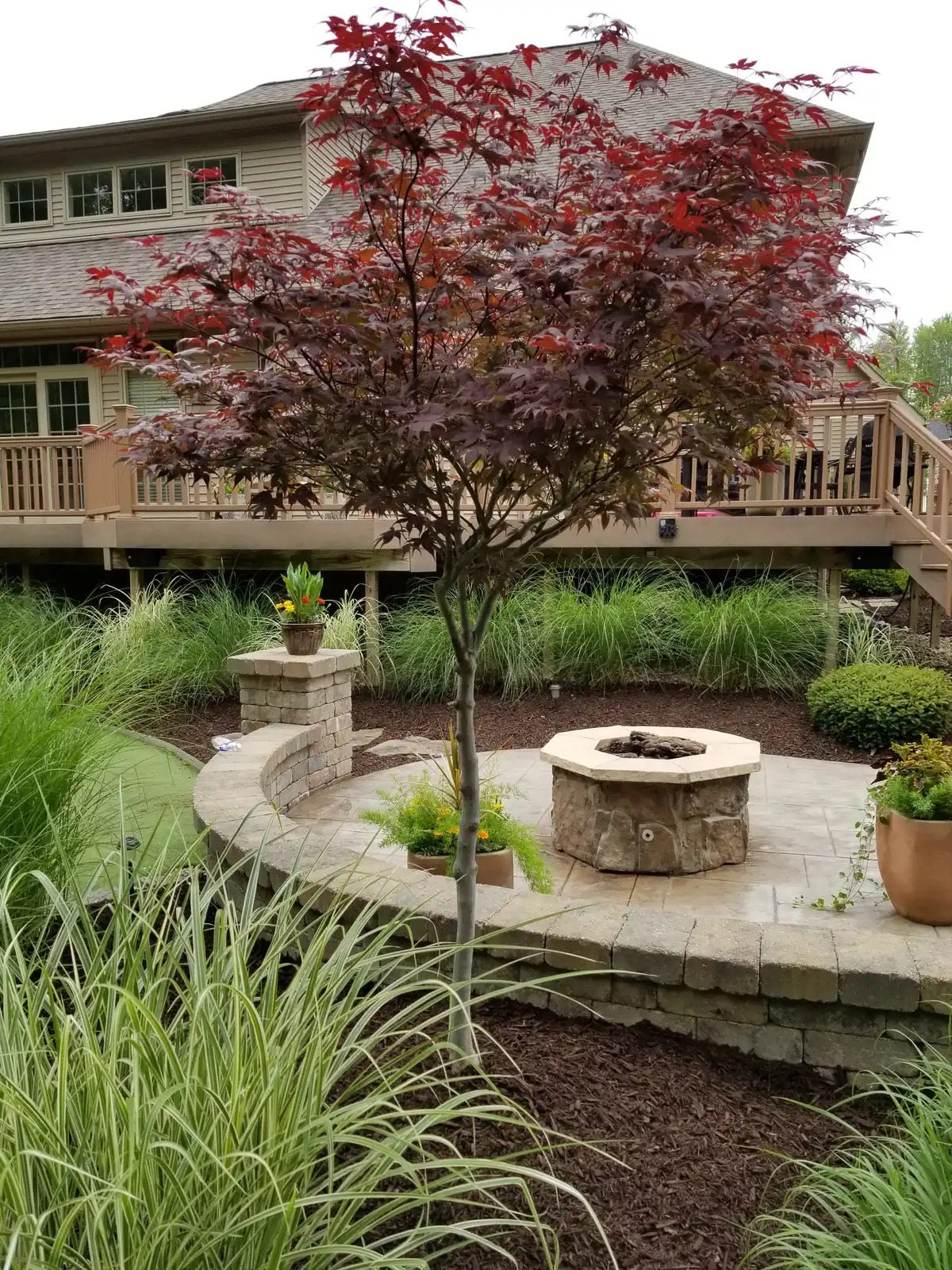
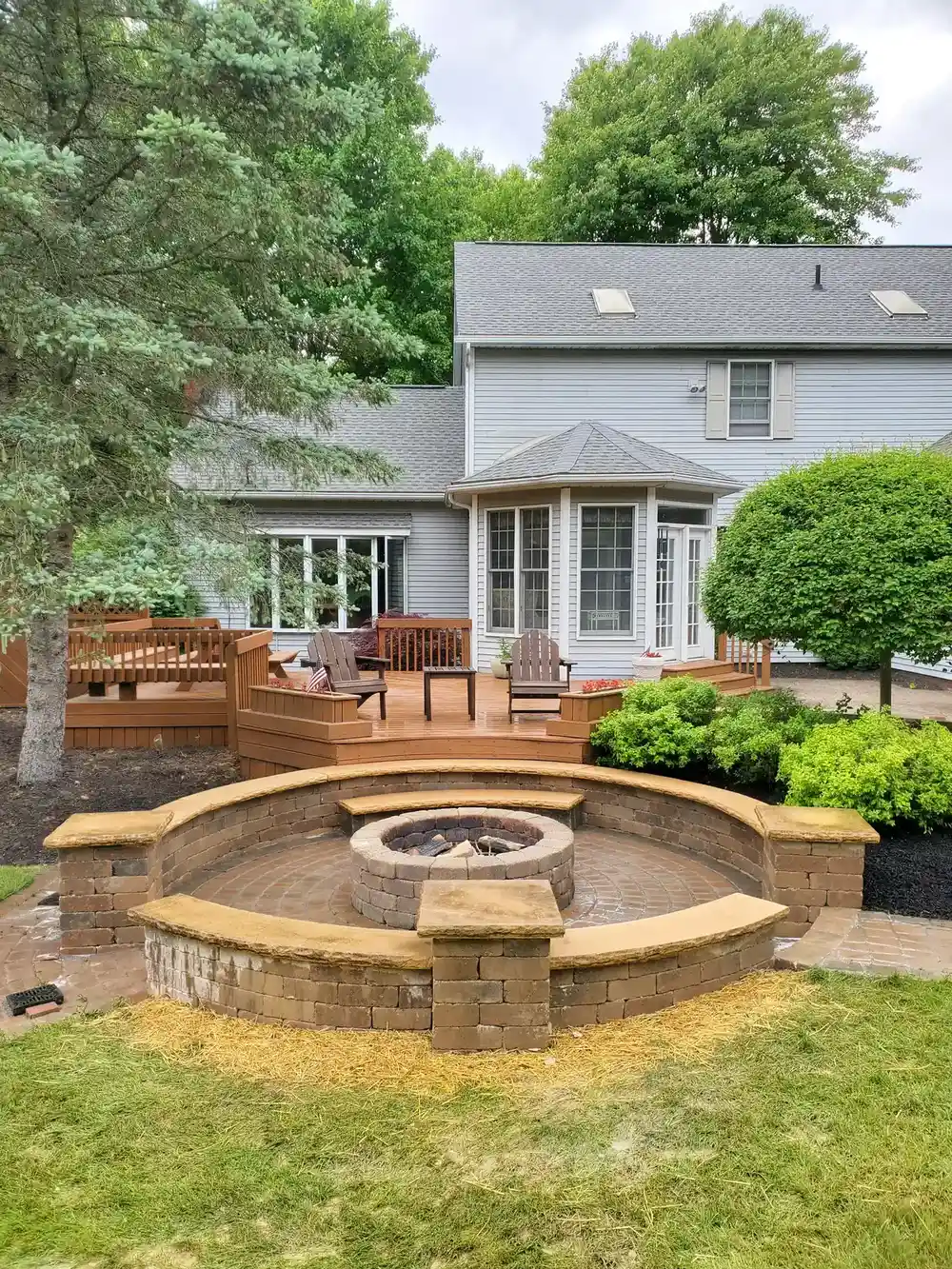
Ask which neighboring areas must be considered now even if they will not be built yet. For homeowners who want to create a gathering area, the outdoor living spaces page shows the kinds of features that may need to work together rather than being planned one at a time.
4. What should the proposal make clear?
A useful proposal should identify the areas included, preparation work, material selections or allowances, installation responsibilities, cleanup, and exclusions. It should also explain which decisions remain open and how a change in scope or an unexpected site condition would be handled.
Cost comparisons only help when the scopes are comparable. An hourly number by itself does not explain crew size, equipment, access, site preparation, materials, or complexity. Compare what each proposal actually includes and what the finished work will require from you afterward.
5. Which decisions need to happen before construction?
Drainage, grading, underground utilities, retaining work, major hardscaping, irrigation, and planting cannot be installed in any order. Ask which decisions establish elevations and preserve access for later work. If installation will be phased, each stopping point should leave the property functional and avoid disturbing completed work when the next phase begins.
You can also ask which finish selections can wait. A coordinated plan should distinguish structural or layout decisions from details that can be confirmed later without changing drainage, access, or the construction sequence.
6. How will the landscape mature and what care will it need?
Planting should be evaluated at mature size, not only on installation day. Ask how trees and shrubs will affect windows, walks, walls, sight lines, shade, and nearby plants as they grow. Grouping plants in threes can create rhythm, but no design rule should override spacing, sunlight, drainage, or maintenance needs.
Be direct about watering, mowing, pruning, mulching, edging, seasonal cleanup, and winter care. A design can look polished and still be the wrong fit if its recurring work does not match your routine. If reducing upkeep is a priority, review the guide to lower-maintenance landscape design in North Royalton.
A Useful First-Meeting Checklist
- Photos of the areas you want to change, including wet spots and access points
- A list of features, trees, views, and structures that should remain
- Your must-haves, optional ideas, preferred timing, and phasing flexibility
- Questions about drainage, grade, utilities, material choices, and exclusions
- The amount of lawn, planting, and seasonal care you want long term
Homeowners considering landscaping in North Royalton, Ohio can use these questions to define the property problems first and compare the actual scope second. When you are ready to discuss your site and priorities, contact A.J. Kraig Landscape and Design for an estimate or call (216) 287-2844.
FAQ: Landscape Design Before Booking
Do I need a finished plan before contacting a landscape designer?
No. It is more useful to identify the areas that are not working, the features you want to keep, your must-haves, your timing, and the level of maintenance you want. Photos and notes about drainage, shade, slopes, pets, and access help make the first conversation productive.
What is the rule of three in landscaping?
The rule of three is a visual guideline that repeats plants or design elements in odd-numbered groups to create rhythm. It should not override mature plant size, site conditions, circulation, or maintenance needs.
What are common landscape design mistakes?
Common mistakes include choosing features before studying drainage and grade, undersizing patios or walkways, placing plants without considering mature growth, ignoring future phases, and selecting a design that requires more upkeep than the homeowner wants.
Is $100 an hour too much for landscape work?
An hourly rate alone cannot show whether a proposal offers good value. Design time, crew size, equipment, materials, site access, preparation, and complexity affect cost. Compare complete scopes, allowances, exclusions, and the change process.
What are the seven principles of landscape design?
Lists vary, but common principles include unity, balance, proportion, emphasis, sequence, rhythm, and variety. They organize the visual design, while the property conditions and intended use determine how they should be applied.