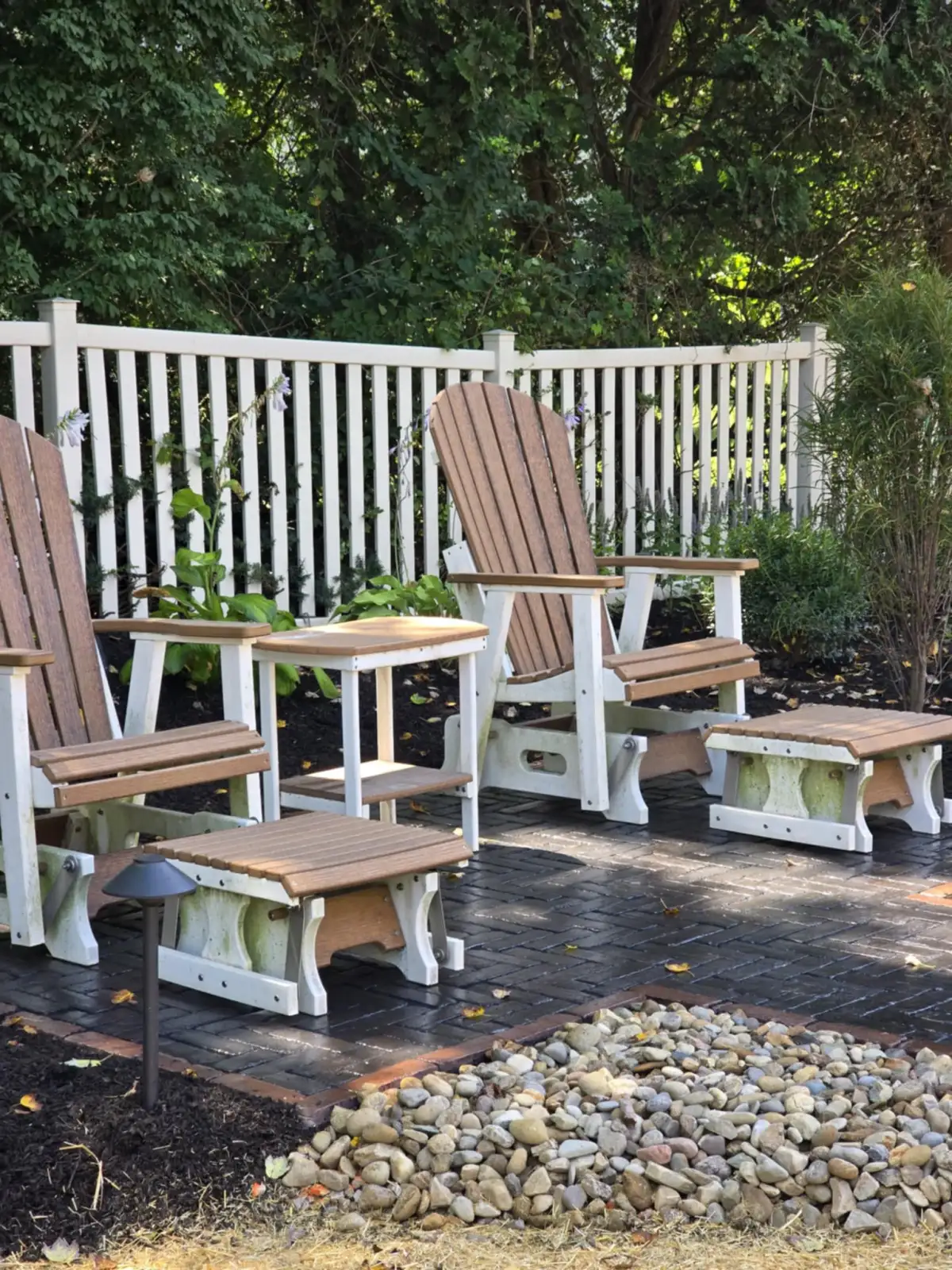
Patio Installation Guide for Northeast Ohio Homeowners
— By A.J. Kraig Landscape and Design
The short answer: A patio that lasts in Northeast Ohio starts with a properly excavated and compacted gravel base, the right material for our freeze-thaw climate, and a pitch that moves water away from your foundation. Plan for a 6- to 8-inch compacted aggregate base, polymeric sand joints, and edge restraints on every side. The best time to install is May through October, and most residential patios in the Cleveland area take 3 to 7 days once materials are on site.
A patio is the centerpiece of most outdoor living spaces in Northeast Ohio. Whether you want a spot for a grill and dining table, a fire pit lounge, or a full outdoor kitchen, the patio surface is where everything happens. It is also one of the highest-return improvements you can make to a residential property in the Cleveland metro. A well-built patio in North Royalton, Brecksville, or Broadview Heights typically adds 60 to 80 percent of its cost back in home value, while giving your family usable outdoor space for decades.
But patio installation in our region is not as simple as laying pavers on dirt. Northeast Ohio's heavy clay soil, aggressive freeze-thaw cycling, and wet springs create conditions that will crack, heave, and shift any patio that was not built on a proper foundation. This guide covers the decisions that determine whether your patio looks perfect in year ten or starts sinking in year two.
Choosing the Right Patio Material
Material choice affects your patio's appearance, durability, maintenance requirements, and cost. For Northeast Ohio's climate, here are the options that perform well through our winters:
Interlocking Concrete Pavers
The most popular choice in the Cleveland market for good reason. Interlocking pavers are engineered for heavy loads and freeze-thaw conditions, available in dozens of colors and textures, and individual units can be replaced if one ever cracks. As an authorized Unilock and Oberfields contractor, we install these products with manufacturer-backed warranties. Concrete pavers range from $12 to $25 per square foot for materials alone, depending on the product line and pattern complexity.
Natural Stone
Flagstone, bluestone, and limestone create a premium, organic look that pairs beautifully with Northeast Ohio's wooded lots and natural landscapes. Natural stone costs more than concrete pavers — typically $18 to $35 per square foot for materials — and installation requires more labor because each piece is individually cut and fitted. The result is a one-of-a-kind surface that only improves with age. Natural stone works especially well for patios integrated into a custom landscape design where the hardscaping needs to blend with surrounding plantings and terrain.
Stamped Concrete
A poured concrete slab with surface patterns and color that mimic stone or brick. Stamped concrete costs less than pavers or natural stone ($10 to $18 per square foot installed) and creates a seamless surface with no joints to maintain. The trade-off is that cracks are inevitable in Northeast Ohio. Concrete expands and contracts with temperature changes, and a crack in stamped concrete cannot be repaired invisibly. Most stamped concrete patios in our region develop visible cracks within 5 to 10 years.
Porcelain Pavers
A newer option gaining popularity in premium hardscaping projects. Porcelain pavers are extremely dense, virtually non-absorbent (less than 0.5 percent water absorption), and highly resistant to freeze-thaw damage, staining, and fading. They cost $20 to $40 per square foot for materials and require a precise, level base because they do not flex like concrete pavers. For homeowners who want a modern, clean aesthetic with minimal maintenance, porcelain is worth the investment.
Base Preparation: The Foundation of Every Patio
The base is where Northeast Ohio patios succeed or fail. Our heavy clay soil does not drain well and heaves aggressively during freeze-thaw cycles. A patio laid on native clay soil — or on an inadequate gravel base — will shift, settle unevenly, and develop puddles within a few seasons.
Proper base preparation for a patio in our region follows this sequence:
- Excavation — Remove native soil to a depth of 10 to 12 inches below the finished patio surface. This accounts for 6 to 8 inches of compacted aggregate base, 1 inch of leveling sand, and the thickness of the paver or stone (typically 2.5 to 3 inches).
- Geotextile fabric — Lay non-woven geotextile over the excavated subgrade to prevent clay from migrating up into the gravel base over time. This step costs almost nothing and prevents the most common long-term failure mode on Ohio clay.
- Compacted aggregate — Install 6 to 8 inches of crushed limestone or recycled concrete aggregate in 2- to 3-inch lifts, compacting each lift with a plate compactor. The base should slope at least 1 percent (about 1/8 inch per foot) away from any structure to direct water off the patio surface.
- Bedding layer — Screed a 1-inch layer of concrete sand or granite screenings over the compacted base. This provides a smooth, level surface for setting the pavers or stone. The bedding layer is screeded to exact grade using pipes or rails as guides — not eyeballed.
Skipping any of these steps, or using the wrong materials (such as pea gravel or round river rock, which do not compact), is the most common cause of patio failure in our area. If a contractor quotes you a patio without mentioning base depth, compaction, or geotextile, ask specifically how they handle Ohio clay.
Drainage and Grading
Every patio must move water away from your home's foundation. This means the finished surface slopes away from the house at a minimum of 1 percent grade — ideally 2 percent if the patio is adjacent to the foundation wall. For a 20-foot-deep patio, that is roughly 2.5 to 5 inches of fall from the house side to the far edge.
On lots with existing drainage challenges — common throughout North Royalton, Strongsville, and the Brecksville area — additional drainage infrastructure may be needed. A channel drain along the low edge of the patio, a French drain at the perimeter, or re-grading the surrounding lawn to direct water away from the patio can all prevent water from pooling on the surface or undermining the base.
If your property already has an irrigation system, heads and supply lines near the patio footprint need to be relocated before excavation. It is far easier (and cheaper) to move sprinkler lines during patio construction than to repair them after the fact.
How Much Does a Patio Cost in Northeast Ohio?
Patio costs in the Cleveland area depend on size, material, site conditions, and design complexity. Here are realistic ranges for 2026:
- Basic paver patio (200-300 sq ft) — $4,500 to $8,000 installed. Standard rectangular layout with a single paver pattern and basic edge restraints.
- Mid-range paver patio (300-500 sq ft) — $8,000 to $16,000. Curved or custom layout, premium paver line, border accents, and integration with a seating wall or fire pit pad.
- Premium outdoor living patio (500+ sq ft) — $16,000 to $40,000+. Multiple levels, integrated retaining walls, built-in seating, outdoor kitchen prep area, and premium materials.
These ranges include full base preparation, materials, labor, and polymeric sand. Site access, demolition of an existing patio, and significant grading work can add to the total. For a detailed breakdown of project costs across all our services, see our Cleveland landscaping cost guide.
Best Time to Install a Patio in Ohio
The patio installation season in Northeast Ohio runs from mid-April through late October, with May through September being the ideal window. The ground needs to be thawed, dry enough to excavate cleanly, and warm enough for polymeric sand to activate properly (above 40 degrees Fahrenheit).
May and June are prime months because the ground has dried from spring snowmelt but the summer rush has not yet filled every contractor's schedule. If you want your patio ready for summer entertaining, scheduling your consultation in March or April gives your contractor time to design, order materials, and build before the July cookout.
A.J. Kraig Landscape and Design typically books patio projects 4 to 8 weeks out during peak season. If a patio is part of a larger project that includes landscaping, a full yard renovation, or synthetic turf, we plan the sequence so the hardscaping goes in first and everything else follows.