
· By A.J. Kraig Landscape and Design
Start With a Residential Planning Range
Our putting green installation guide lists $6,000–$12,000 as a planning range for a 400–600-square-foot residential green. Use that as a starting point for a conversation, then have your yard and desired layout evaluated. Additional chipping areas, complex contours, drainage work, or surrounding hardscape can change the total.
A useful estimate answers two questions: how much usable golf space are you getting, and what work is included to make it play well? A roll of putting turf, a DIY kit, and a professionally installed backyard green cover very different scopes. Comparing their headline prices alone will not give you a reliable budget.
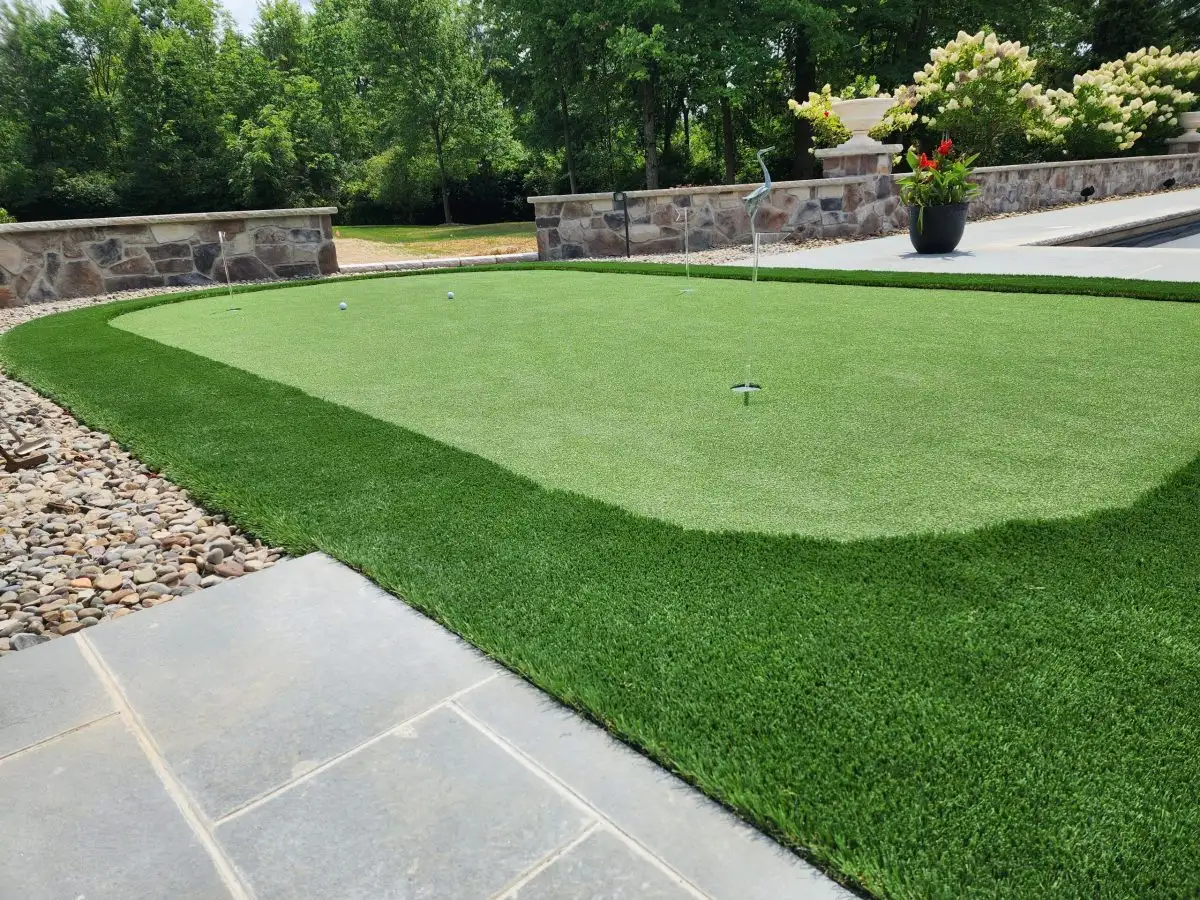
Measure the Putting Surface and Fringe Separately
The short putting surface is only part of the footprint. A fringe border, chipping approach, or connecting turf area adds material and preparation beyond the area where you putt. Ask whether a quoted square footage includes all of those surfaces.
A 400-Square-Foot Green Can Occupy More Than 400 Square Feet
For a simple example, a 20-by-20-foot putting surface is 400 square feet. Add a two-foot fringe around all four sides and the outside dimensions become 24 by 24 feet: 576 square feet in total, including 176 square feet of fringe. Curved layouts need their own measurements.
That calculation explains area, not price. Ask how putting turf and fringe are measured and priced before multiplying an online rate by your available yard space.
Which Choices Change the Installed Cost?
Your practice goals and the turf system
Short putting practice, family play, and receiving chip shots call for different design conversations. Discuss the putt lengths you want, your preferred pace, and whether you need an approach area. Ask which turf and supporting system the proposal specifies and how those choices support the way you will practice. Ordinary landscape turf and putting turf are not interchangeable budget items.
Contours, cups, and the shape of the green
Breaks are shaped into the support beneath the surface; they are not just decorative features in the turf. A more involved contour plan, additional cup locations, and detailed perimeter cuts add work. Choose the putts you want to practice before choosing the number of holes. A smaller green with useful distances and manageable slopes may serve you better than a larger layout you rarely use.
Removal, base preparation, and drainage
Existing grass and soil may need removal and disposal before the base is placed, compacted, and shaped. Wet spots, changes in grade, and connections to adjacent patios can expand that preparation. For your North Royalton or Northeast Ohio yard, point out where water collects after rain and where downspouts discharge so the estimate addresses those conditions early.
Published industry rates can have important exclusions. For example, Southwest Greens’ cost guide identifies size, design, access, and site preparation as cost factors—and explicitly excludes site preparation from its size-based pricing. Check inclusions before comparing any online rate with a complete local proposal.
Equipment access and the surrounding yard
Measure the gate and identify the route from the driveway to the green. Narrow access can change how materials and excavated soil move through your yard. Ask whether the price includes protection and restoration along that route. New steps, retaining walls, lighting, or a patio extension should have their own defined scope rather than disappear into a single turf allowance.
Where Can You Simplify Without Losing the Green You Want?
Start with a compact putting layout, a clear fringe boundary, and the cup positions you will use most. Price an expanded chipping zone or nearby seating area separately. If the project needs a retaining wall or significant drainage correction to fit the chosen location, compare another location before committing to that layout.
Keep necessary preparation in the base scope. Reducing decorative extras is a different decision from leaving out the work that supports the surface. If you also want a larger synthetic lawn, our synthetic turf cost guide covers the broader lawn installation questions.
Account for Care After Installation
Synthetic greens reduce the mowing and watering associated with natural grass, but they still need care. Leaves and other debris need removal, cups need cleaning, and the selected system may need infill attention or surface grooming. Southwest Greens’ putting green maintenance guidance describes cup cleaning, organic matter removal, infill leveling, and rolling among its care tasks. Follow the instructions for your installed product and ask what professional maintenance may cost.
Also discuss installation timing before planning an event around the finished green. Site work, access, weather, and coordination with other landscape construction affect the schedule. Have the proposed start, expected working time, and any weather allowances stated with the scope.
Putting Green Cost Questions
How much should I budget for a backyard putting green?
A.J. Kraig’s installation guide lists $6,000–$12,000 as a planning range for a 400–600-square-foot residential green. The final quote depends on the measured layout, site preparation, drainage, access, turf system, fringe, contours, cups, and any related landscape work.
Why can a smaller putting green cost more per square foot?
Delivery, equipment setup, excavation, and disposal still need to happen on a small installation. Tight access, curved edges, and detailed shaping can also take substantial labor without adding much putting area. Compare the complete installed scope and usable practice layout.
Can putting green turf be laid directly over dirt to save money?
Simply covering unprepared dirt does not provide the stable, shaped support a putting surface needs. Site preparation, a suitable compacted base, and drainage planning are part of creating consistent ball roll. Resolve wet or soft areas before installing the surface.
Does a backyard putting green increase home value?
Do not count on a specific resale return to justify the budget. A practice green is a personal-use improvement, and its appeal will vary among future buyers. Base the decision on how often you will use it, how it fits your yard, and the installation and care costs you are comfortable carrying.
Explore landscaping in North Royalton or our Northeast Ohio service area. For the installation process and green options, visit putting green installation. Browse all landscaping articles.