Sprinkler System Startup Guide for Northeast Ohio
— By A.J. Kraig Landscape and Design
The short answer: In Northeast Ohio, you should activate your sprinkler system between mid-April and late May, once overnight temperatures stay consistently above 32 degrees Fahrenheit. A proper startup involves slowly opening the main water valve, checking every zone for broken heads and leaks, adjusting spray patterns that shifted over winter, and reprogramming your controller for the current season. Skipping these steps risks cracked pipes, flooded zones, and wasted water that can cost hundreds of dollars to fix later in the season.
After a long Northeast Ohio winter, your irrigation system has been sitting dormant for five to six months. Frost, soil movement, freeze-thaw cycling, and rodent activity can all cause damage that you will not discover until you turn the water back on. A careful, methodical startup catches these problems early, before they ruin your lawn or run up your water bill. Whether you handle the startup yourself or hire a professional, this guide covers every step of the process for systems in North Royalton, Cleveland, Brecksville, and the surrounding areas.
When to Start Your Sprinkler System in Ohio
Timing is the single most important decision in your spring startup. Turn the system on too early and a late frost can freeze water inside the pipes and crack fittings. Wait too long and your lawn suffers during the first hot stretch of the season.
For Northeast Ohio, the safe window is typically between mid-April and late May. The key indicator is not the calendar date but the overnight temperature pattern. You need at least seven consecutive nights above 32 degrees Fahrenheit before pressurizing your system. In communities like North Royalton, Broadview Heights, and Strongsville, this usually happens by the last week of April. Areas closer to Lake Erie, including parts of Cleveland and Lakewood, may see later last-frost dates due to lake-effect cooling.
According to the National Weather Service, the average last frost date for the Cleveland area is April 28, but late freezes into mid-May are not uncommon. In 2024, parts of Northeast Ohio recorded below-freezing temperatures as late as May 10. Checking a 10-day forecast before your startup eliminates the risk of freeze damage to freshly pressurized lines.
Step-by-Step Sprinkler Startup Process
Whether your system runs on Hunter, Rainbird, or another brand, the startup sequence is the same. Follow these steps in order to avoid water hammer, head damage, and unnecessary leaks.
1. Inspect the Backflow Preventer
Your backflow preventer is the device mounted above ground near where the irrigation supply line exits your house or connects to the main water line. Before turning anything on, visually inspect it for cracks, corrosion, or frost damage. Check that the test cocks are closed and the shutoff handles are in the off position. If you see any visible cracks in the body or bonnet, do not pressurize the system — call a licensed irrigation contractor to replace the damaged component first.
2. Open the Main Valve Slowly
This is the step most homeowners rush, and it is where most startup damage occurs. Opening the main valve quickly sends a surge of water pressure through pipes that have been empty and cold for months. This pressure spike — called water hammer — can crack fittings, blow heads out of the ground, and rupture lateral lines buried just inches below the surface.
Open the main shutoff valve no more than one-quarter turn and wait 30 to 60 seconds. Listen for hissing or rushing water, which may indicate a broken line. Continue opening the valve slowly over 3 to 5 minutes until it is fully open. This gradual pressurization lets air escape through the heads instead of building up inside the pipes.
3. Run Each Zone Manually
Go to your controller and run each zone one at a time for 3 to 5 minutes. Walk the entire zone while it is running and check for the following:
- Broken or tilted heads — Mower damage, foot traffic, and frost heave can crack head casings or knock them out of alignment. A tilted rotor head watering the sidewalk instead of the lawn wastes 30 to 50 gallons per cycle on that zone alone.
- Clogged nozzles — Dirt, sand, and debris accumulate in nozzles over winter. A partially clogged nozzle produces an uneven spray pattern that leaves dry spots in the turf. Pop the nozzle out, rinse it in clean water, and reinstall.
- Leaking pipes or fittings — Look for water bubbling up from the ground in areas between heads. Subsurface leaks waste water, erode soil, and can undermine nearby hardscaping features like walkways, patios, and retaining walls.
- Low-pressure zones — If one zone has noticeably weaker pressure than the others, a valve may not be opening fully, a main line fitting may be leaking underground, or the filter screen at the valve is clogged.
4. Adjust Head Spray Patterns
Over the winter, soil movement and mowing can shift head positions. Even a fraction of an inch of tilt changes where the water lands. Adjust each rotor head's arc and radius so the spray covers only turf and planting beds — not driveways, sidewalks, or the side of your house. For spray heads with fixed nozzles, confirm the spray reaches the next head in the zone (head-to-head coverage) so no dry gaps form between them.
If you have recently completed a landscape design project or added new planting beds since last fall, some heads may need to be relocated or the nozzle type changed to match the new layout. Drip zones that serve beds, shrubs, or containers should also be checked for cracked emitters or disconnected tubing.
Programming Your Controller for Late Spring
The watering schedule you used last August is wrong for May. Northeast Ohio's late spring brings cooler nights, more rainfall, and shorter evaporation windows than peak summer. Overwatering in May is one of the most common mistakes homeowners make after startup, and it leads to fungal disease, shallow root growth, and higher water bills.
For established cool-season lawns (Kentucky bluegrass, perennial rye, and tall fescue — the dominant turf types in our region), set your controller to run 2 to 3 days per week in May and June. Each zone should deliver approximately 0.5 to 0.75 inches of water per cycle. For most rotor zones, that means a run time of 25 to 35 minutes. Spray zones typically need 12 to 18 minutes to deliver the same amount.
The best time to water is between 4:00 AM and 8:00 AM. Early morning watering minimizes evaporation loss and gives turf blades time to dry before nightfall, which reduces the risk of fungal infections like brown patch and dollar spot — both common in Northeast Ohio's humid summers.
If your controller supports a rain sensor or soil moisture sensor, confirm that the sensor is working before relying on it. A rain sensor with a dead battery or corroded contacts will not pause cycles during rainfall, and a soil moisture sensor buried too deep may never register adequate moisture at the root level.
Common Startup Problems and What They Mean
Some issues are easy to fix yourself. Others require professional diagnosis. Here is what the most common symptoms usually indicate:
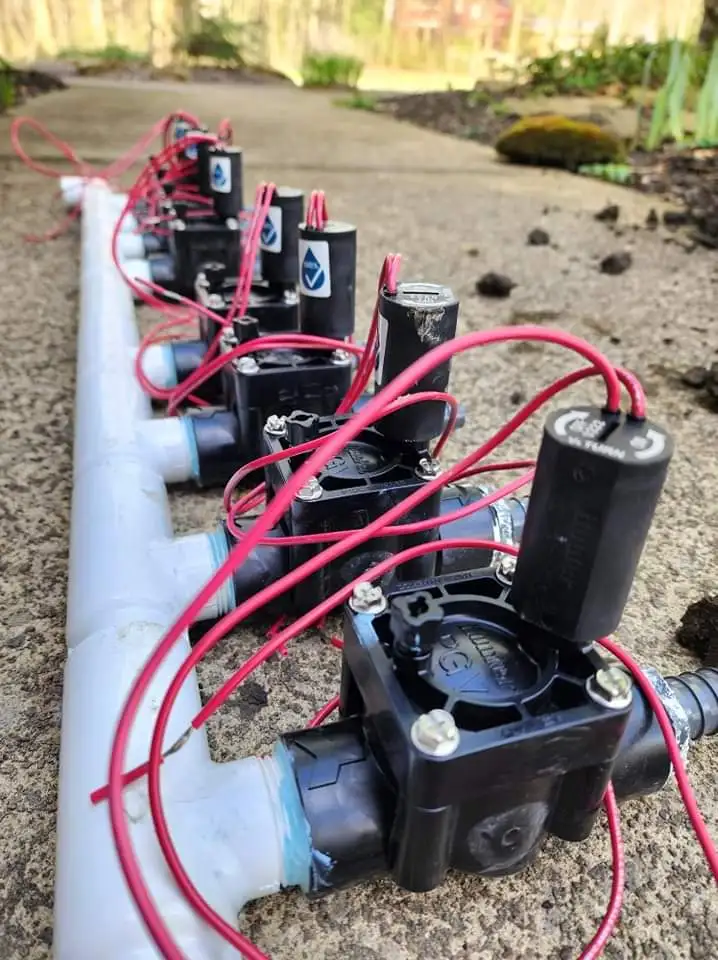
- One zone does not turn on — Usually a bad solenoid or a wiring issue at the valve box. Check the controller for error codes. If the zone worked last fall and the wiring is intact, the solenoid likely failed over winter and needs replacement.
- Water continues to flow after zone shuts off — The diaphragm inside the valve is torn or debris is preventing it from sealing. This is a common issue on older systems and usually requires disassembling the valve to clean or replace the diaphragm.
- Heads only pop up partially — Low water pressure, a partially closed valve, or too many heads on one zone. This was sometimes masked last season if the problem developed gradually. Count the heads on the affected zone — if a previous contractor added heads without accounting for flow capacity, the zone may need to be split into two.
- Controller display is blank — Check the transformer and outlet first. If the controller has a battery backup, replace the battery — most 9V backup batteries last 1 to 2 years. Older controllers may need the transformer tested with a multimeter.
Water Conservation Tips for Ohio Homeowners
Northeast Ohio receives an average of 39 inches of rainfall per year — more than most of the country. A properly programmed irrigation system supplements rainfall rather than replacing it. The EPA estimates that the average American household uses 9,000 gallons per month on outdoor watering, but up to 50 percent of that is wasted through inefficiency, overwatering, and evaporation.
Three adjustments that reduce waste immediately:
- Install a smart controller — Wi-Fi-connected controllers from Hunter (Hydrawise) and Rainbird (ESP-TM2 with LNK module) adjust schedules automatically based on local weather data. They skip watering on rainy days, reduce run times during cool spells, and increase them during heat waves. Most smart controllers pay for themselves in water savings within 2 to 3 seasons.
- Switch spray heads to rotary nozzles — MP Rotator-style nozzles apply water at roughly one-third the rate of traditional spray nozzles. This slower application rate gives the water time to soak into Northeast Ohio's clay soil instead of running off the surface into storm drains.
- Use cycle-and-soak programming — Instead of running a zone for 30 straight minutes, split it into two 15-minute cycles separated by a 30-minute soak period. This prevents runoff on sloped areas and compacted clay, which is prevalent throughout Cuyahoga County.
For areas of your property that do not need irrigation at all — like shaded side yards, ground-cover beds, or rarely used sections — consider converting those zones to synthetic turf. Artificial turf eliminates watering, mowing, and fertilizing for surfaces that are difficult to maintain with natural grass.
When to Hire a Professional for Irrigation Startup
A basic startup — opening the valve, running each zone, and adjusting a few heads — is manageable for most homeowners. But certain situations call for a trained technician with the right tools and parts:
- You suspect a mainline leak — Water bubbling up between the backflow preventer and the first valve box, or a sudden drop in household water pressure, often means a break in the main supply line. Finding and repairing a mainline break requires excavation and pipe repair that most homeowners are not equipped to handle.
- Your backflow preventer failed its test — Ohio requires annual backflow testing on irrigation systems connected to public water supplies. If your device fails the test, a certified technician must repair or replace it before the system can legally operate.
- Coverage gaps are not fixable by adjusting heads — If your lawn has chronic dry spots that persist even after adjusting arcs and run times, the original system design may have inadequate head spacing. Correcting this requires adding heads, re-piping lateral lines, and sometimes splitting zones — all of which require irrigation design expertise.
- You are planning new landscaping — If a landscape renovation is on the schedule this season, coordinate the irrigation startup with your landscape contractor. Adding or relocating heads, adjusting zones, and integrating drip lines into new planting beds is far more efficient when done as part of a single project.
A.J. Kraig Landscape and Design provides full irrigation services across North Royalton, Cleveland, Brecksville, Broadview Heights, Strongsville, Fairlawn, and all of Northeast Ohio. We install and service Hunter and Rainbird systems, perform spring startups and fall winterizations, and design new irrigation systems for properties of all sizes. If your sprinkler system needs more than a simple restart this spring, contact us for a free on-site evaluation.